Nanoparticle/MOF composites: preparations and applications
Jia Yu, Chao Mu, Bingyi Yan, Xinyu Qin, Chao Shen,
Huaiguo Xue and Huan Pang*
School of Chemistry and Chemical Engineering, Yangzhou University,
Yangzhou,225002, Jiangsu
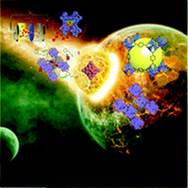
Over the last twenty years, MOFs have emerged as a new promising porous material in the areas of gas sorption and separation, catalysis, drug delivery, and molecule sensing. Moreover, nanomaterials have also attracted widespread attention in recent years. Owing to the porous structure of MOFs, we can combine nanoparticles with MOFs to obtain nanoparticle/MOF composites, which possess the advantages of both parent materials. In the present study, we utilized two main methods to introduce nanoparticles into MOFs: a method employing MOFs as templates to hold guest nanoparticles in their channels and a method employing the encapsulation of pre-synthesized nanoparticles. The former includes chemical vapor deposition, solid grinding, liquid impregnation, and double solvent methods, and the latter comprises some new techniques such as the self-sacrificing template technique. Herein, we introduced some preparation techniques for nanoparticle@MOF composites and their applications, including some traditional applications, as well as recent new progress. Moreover, an outlook towards the future development of nanoparticle@ MOF composites including better synthesis techniques
and their applications in catalysis and energy storage has also been provided.
Mater. Horiz., 2017, 4, 557-569;IF= 10.706
文章链接:http://pubs.rsc.org/-/content/articlehtml/2017/mh/c6mh00586a

 苏公网安备 32100302010246号