The Role of Nanocrystalline Cellulose during Crystallization of Poly(ε-caprolactone) Composites: Nucleation Agent or Not?
Qiaolian Lv, Chunjiang Xu, Defeng Wu,* Zhifeng Wang, Ruyue Lan, Lisheng Wu
School of Chemistry and Chemical Engineering, Yangzhou University
Provincial Key Laboratories of Environmental Material & Engineering
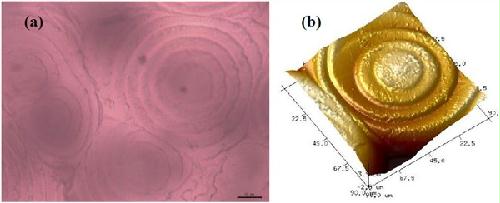
Abstract:Poly(ε-caprolactone) (PCL) composites with pristine nanocrystalline cellulose (NCC) and acetylated nanocrystalline cellulose (aNCC) (with 1.85±0.15 degree of substitution) were prepared. Different roles of NCC andaNCC to the crystallization of PCL were explored. NCC acts as the nucleation agent, promoting the formation of thickened PCL lamellae. Thus, PCL-NCC sample shows higher melting point (Tm) and degree of crystallinity (Xc) than neat PCL. However,aNCC plays the role of antinucleation agent, decreasingXcand crystallization temperature (Tc) of PCL. This is because the relaxation of PCL chain segments is restrained by the presence ofaNCC through hydrogen bonding between two phases. As a result, the looser fold surfaces of lamellae form in PCL-aNCC sample, with decreased lamellar thickness. The ring-banded morphology is therefore observed on this sample because of good compatibility betweenaNCC and PCL and higher level of surface stress of PCL lamellae, which is not observed on PCL-NCC one
文章链接:http://www.polymer.cn/ss/wudefeng/publicationsshow_9759.html

 苏公网安备 32100302010246号